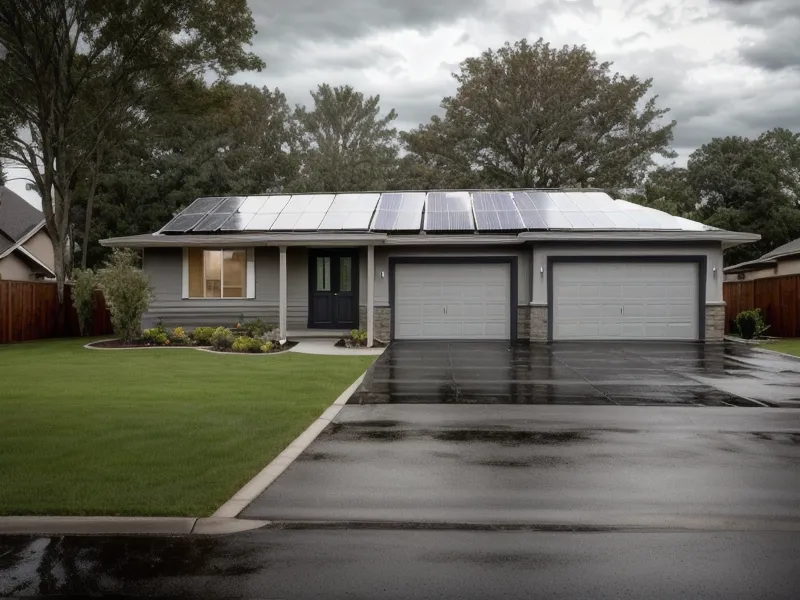
Think about the one thing you'd fight hardest to keep running if the power in your neighborhood didn't come back for three days. For us it wasn't the air conditioning, and it wasn't the WiFi, though our kids would argue otherwise. Hurricane season here turns that question from hypothetical to urgent fast, usually with about six hours' notice. We've been through it twice in one year, tested more backup power gear than we'd like to admit, and landed somewhere most guides skip past: not portable versus permanent as rivals, but as two stops on the same road toward real energy independence, maybe even living mostly off-grid eventually. We picked both, in a specific order, and that order is the actual story here.
Quick disclosure before we go further: a few links below are affiliate links, and we earn a small commission if you buy through them, at no extra cost to you. We only recommend gear we've tested during our own outages, not stuff we read about on a spec sheet. And since part of this involves keeping medication cold, we'll say it plainly — neither of us is a doctor. Talk to your own physician about your specific storage needs. This is what worked for our family, not medical advice.
Two Outages That Rewrote Our Backup Power Plan
The first time the grid went down for real, we treated it like an extended camping trip. Battery lanterns, a propane camp stove, blankets and flashlights. Charming, for about a day. We genuinely thought that setup could carry a whole house through anything. It couldn't. By the second night the lanterns were dim, the stove was down to its last canister, and the fridge had started to sweat around the door seal.
Round two, early last fall, was worse, and it's the one that actually changed things. My wife works from home as a freelance graphic designer, and she was mid-upload on a deadline when the house went dark; the progress bar sat at ninety-eight percent and then died along with the modem. That stung. It wasn't the scary part, though. The scary part was the insulin in the fridge, and a lantern-and-propane setup that was never built to keep anything cold for three straight days.
By the third day, I was standing in the garage texting my wife two lines: fridge's holding at thirty-seven, we're okay, before either of us said out loud how close that had actually been. Miriam, a longtime friend of my wife's from her freelance days, called that night just to check in. She's one of those people who goes completely calm in a real emergency and has almost no patience left for a manufactured one. She didn't sugarcoat it: lanterns and a camp stove were never a backup plan. They were a bridge, and we'd run out of bridge.
What Portable Power Gets Right
Portable power still earns its place in our garage. A gas generator or a battery station is cheap to start with, easy to store if you're in an apartment or a condo, and perfectly adequate for a one or two day blip, a tripped breaker, a downed line during an ordinary thunderstorm. We still keep a small unit, an Orgone Motor, around for exactly that kind of light-duty job: charging phones, running a lamp, keeping a router alive for an hour. Figuring out how many watts your fridge and a couple of lights and a laptop actually pull, versus what's printed on the box, is its own small project, one we won't walk through here, but it's worth doing before you buy anything.
Where Portable Power Runs Out of Room
Where portable falls apart is scale. Once you're trying to run a whole house, fridge, some lights, a couple of laptops, medical equipment, a gas unit has to work overtime. Overtime with a gas engine means noise, fuel runs, and real safety limits. Carbon monoxide risk alone means you can't just set a generator wherever it's convenient; it needs genuine distance from any window or door, which is a lot to ask on a typical suburban lot. There's also a quieter trade-off nobody puts on the box: louder, cheaper units tend to push more raw power, and quiet ones tend to cost more and deliver less, so you're choosing one or the other, not both. We were also getting power that felt inconsistent enough to make us nervous around sensitive electronics, my wife's design monitors especially. Somewhere in the middle of another gas run at midnight, we started asking a different question: what if we stopped depending on fuel entirely? That question is the whole reason we ended up writing about why we stopped relying on the power grid in the first place.
Permanent Power: The Case for Building In
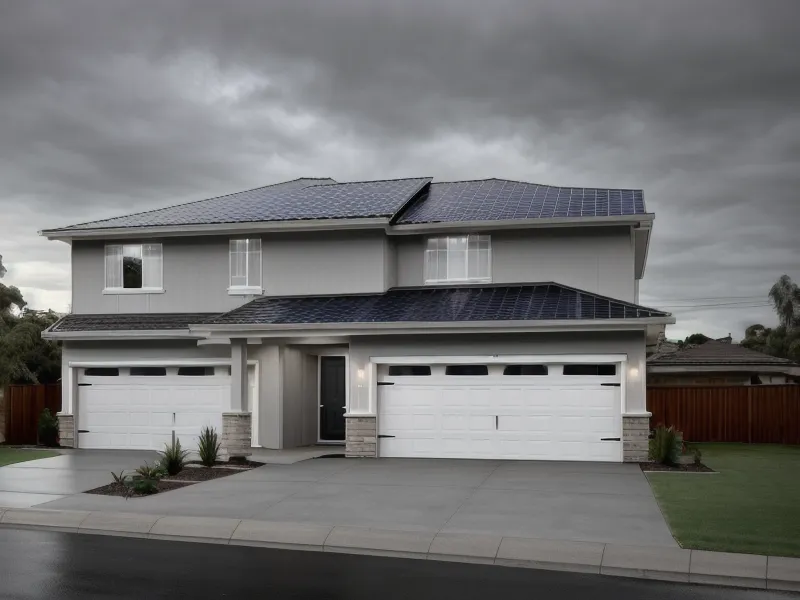
Permanent is where the real decision lives, and it isn't just about money, though my wife, who handles our budget tracking, will tell you money was a big part of it. We looked first at a budget-friendly build, the Power Grid Generator, which is a reasonable starting point if you're just trying to get off zero and don't need to run much. For a household juggling a home office and a fridge that genuinely cannot warm up, we needed more headroom than that.
A guy in our neighborhood Facebook group, Angus Portillo, keeps a running spreadsheet ranking every backup device he's personally tested, and he hands it out to anyone who asks. His notes on runtime versus noise were part of what convinced us portable alone wasn't going to cover a whole house. So we built out the Energy Revolution System, a blueprint-based build rather than a plug-and-play box. My wife liked that it didn't require paying for a brand name or an installation crew. I liked having something I could actually understand and maintain myself.
Whether you can put a system like this in without hiring an electrician is a longer conversation than fits here, but it shaped which build we chose. So did the fact that our part of the grid, the Texas Interconnect (ERCOT), runs largely on its own; when a major storm hits, we're not waiting on help from outside the state. Full energy independence is really more of a spectrum than a switch you flip, and where a family lands on it depends on budget, risk tolerance, and how much of the build they're willing to do themselves. We're also skeptical of anything marketed as generating power from nothing; if a product's claims sound like they'd break basic physics, we pass, though a blueprint that just trims cost using standard hardware-store parts is a different animal.
The first time the transfer switch actually kicked over during a real outage, it wasn't dramatic. Just a single mechanical thunk from the garage, and then the refrigerator clicked back on while the rest of the house stayed exactly as quiet as it had been thirty seconds earlier. No shouting. No scrambling for lanterns. That's the whole pitch, honestly.
So Which Should You Buy First?
If you're renting, living in an apartment or condo, or you just need something for a one or two day blip a few times a year, start portable. It's cheaper, it's flexible, and if you ever have to evacuate, you're not leaving a fixed asset bolted to the side of a house you can't get back to. If you own your home, you're managing a whole-house need like medical equipment or a job that depends on being online, and outages in your area regularly run past a day or two, a permanent build earns its cost back fast. Deciding what actually needs power first, versus what can wait, matters here too. A phone charger can wait. Medication and a fridge that has to stay cold can't, and prioritizing correctly in the moment is half the battle. So is knowing what to do in that first hour after the lights go, what gets unplugged, what gets checked, what gets moved to a cooler, a decision we've come to trust more than any single piece of gear. Whether a battery-based system or a fuel-based one suits you better is its own separate question, worth working through before you spend anything.
These days, we don't think of portable and permanent as competing purchases. They're two tiers most families end up owning in sequence, portable first, permanent later, once a bad outage makes the gaps obvious. That was our order too.
For the beyond-the-basics side of outage prep, we also wrote about everything we wish we'd packed before that first long outage, not just flashlights. But if your situation looks anything like ours, a home office that can't afford days without power and someone depending on a cold fridge, we'd point you toward the Energy Revolution System as the build that finally got us out of fuel-panic mode every time the sky turns green. It kept the budget where my wife wanted it, and it kept me from making another midnight gas run.
Nothing on this website constitutes medical, legal, or financial advice. All content is based on the author's personal experience and independent research. Consult a licensed professional for guidance specific to your situation.