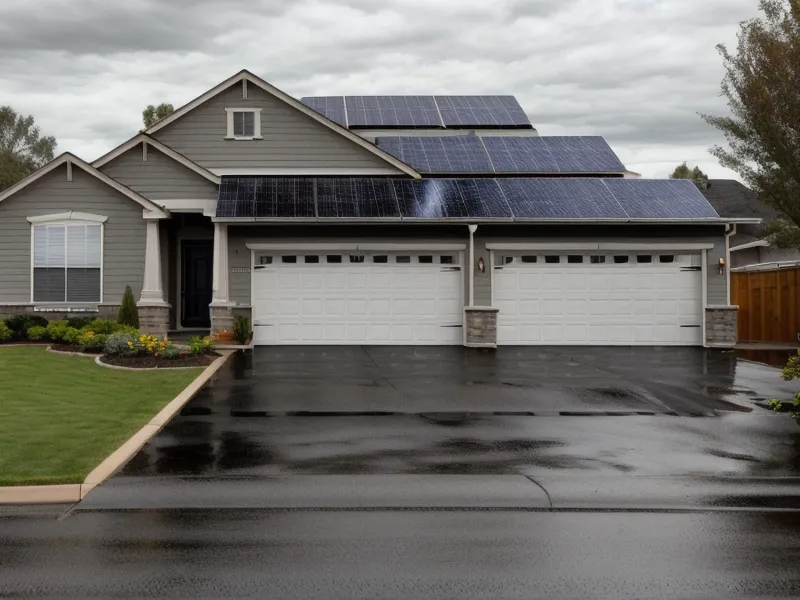
Our neighbor's whole-home generator can run two air conditioners, a washer, and every light in his house at once. Our best backup gear that same week could run a phone, a Wi-Fi router, and one very small, very stubborn insulin cooler — and it cost less than what he spent refueling his tank in a single afternoon.
That gap is really the whole story of our approach to emergency prep on a real family budget. My husband coaches little league on the weekends; I do freelance design work from a laptop at the kitchen table most days. Neither of us installs generators for a living. By the time a Category 1 hurricane watch shows up in the forecast, we've already run through our checklist twice, because our second multi-day blackout turned budget power from a side hobby into a family-safety habit. Around here, that's just Houston living. You don't get to skip hurricane season, so you plan around it instead.
Why the All-In-One Kit Was the First Thing to Fail
The first mistake we made was buying anything with the word "Emergency" printed on the box. Hand-crank radios that felt ready to snap if you turned the handle too hard. A lead-acid jump starter heavy enough to strain a shoulder, hauled out once and never touched again. One humid stretch, a sharp chemical smell drifted out of the laundry room from an off-gassing battery, not something you want sitting near kids.
None of that gear solved our actual problem. Reliable enough to keep one small thermometer running for days straight? Not those. It doesn't matter how many features a hundred-dollar all-in-one gadget crams in if it can't hold a charge on the one job that matters. Medical equipment always jumps to the top of our list before phones or Wi-Fi, though how you actually rank and wire those priorities is really its own conversation, and ours is simple: the insulin question gets answered first, every time.
During that first outage, panic took over before any of the gear did. More than one run to the gas station at two in the morning, buying every bag of ice they had left, telling myself I was buying time for the cooler. I wasn't. Ice does not last through a Texas summer power outage, and I was back in the car within hours, running the same errand again.
Skip the Folding Solar Panel: Buy This Instead
Cheap folding solar panels are everywhere once you start searching for budget backup gear, usually $60 or $80 and promising the world. We tested a few on grey, overcast days and got almost nothing back, maybe enough to nudge a phone battery a few percent over several hours. A storm sky over Houston does not cooperate with a panel that thin.
Power banks did the job the solar panels couldn't. A large-capacity battery pack paired with a car charger turned out to be far more dependable, because you can top it off from the truck while you're out clearing branches or checking on a neighbor, then carry that stored power back inside. This sits at the modest end of the spectrum between full grid reliance and true energy independence, nowhere near solar panels bolted to a roof, but a real step up from doing nothing at all.
Why a Cheap Power Bank Works for a Houston Family
Losing power is one thing. Losing internet on top of it is another problem entirely when your paycheck depends on hitting client deadlines from a laptop. Here's what most people don't realize: the actual internet line into the house is often still alive during an outage. It's the router that's dead, because it needs a steady 12-volt feed that the wall socket obviously isn't providing anymore.
A basic step-up cable solves that, converting a power bank's regular USB output into what the router wants. None of this required an electrician or any permanent wiring, just a cable you plug in yourself, which is a very different project from a full household backup install. One charged bank kept our Wi-Fi alive long enough for me to upload client files and hit a deadline I'd have otherwise missed completely.
There's a catch worth mentioning. Some cheap power solutions use a rougher, modified version of AC power that can be hard on sensitive electronics like a laptop charger. We stick to plain USB and DC cables for anything delicate, and leave the gentler inverters for a different budget range entirely. We're not walking through the wattage math here, either: sizing a system to your actual appliances deserves a careful pass of its own, not a rushed guess mid-storm.
Redundancy Over One Big Purchase
Budgeting for this the way you'd budget for a road trip helped more than any spec sheet did. You don't buy one giant snack for six hours in the car with kids in the back, you pack several smaller things, because if one gets left at a gas station, the rest are still in the bag. We did the same thing with batteries: one bank dedicated to the insulin cooler's thermometer and a small fan, one for the router, one for phones. If a single bank dies, the whole plan doesn't die with it.
This isn't a fight between a home battery system and a gas generator — that's a bigger, pricier decision for a different day, one we've weighed elsewhere in more detail, including in our honest look at whether the Energy Revolution System Worth It? A Practical Houston Family's Honest Review made sense for us. For the under-$100 version of this problem, modular beats monolithic every time.
Our friend Miriam, who happens to be a pharmacist, was the first person I called about keeping the cooler stable, and true to form, she'd cited three sources before I finished asking the question. Neither of us has any medical training beyond that phone call. Every family's medication needs are different, so we always tell people to check with their own doctor or pharmacist instead of copying our setup exactly.
Budget Power for Houston Living: Two Paths We'd Choose Between
Two clear paths exist once you strip away the marketing. Path one: buy the all-in-one gadget or the folding solar panel, hope it handles everything, and find out during the next storm whether it actually does. Path two: skip the single gadget, buy two or three dedicated power banks instead, and assign each one a job before the storm ever arrives.
We'd only recommend path one if your outages are short and rare and you mostly want a backup flashlight in a drawer somewhere. Path two is the one we'd choose every time for a family that works from home, depends on medical refrigeration, or can't afford a lost week of income. It costs about the same. It just survives contact with an actual hurricane.
What Changed the Next Time the Power Went Out
The next time an outage rolled in, we'd spent that same afternoon walking the kids along The Woodlands Waterway before the sky turned that flat, heavy grey it gets right before a bad one. Next door, a generator roared through the rain for two days straight, then went abruptly, almost embarrassingly quiet once the tank ran dry. Ours never roared at all. I plugged the cooler's thermometer into the small charged bank we kept in the kitchen and waited for the alarm that meant trouble. Nothing. Just quiet, the good kind.
None of this makes us experts, and it definitely doesn't make us preppers. We're a couple who got tired of guessing whether the fridge, the cooler, or the Wi-Fi would survive the next storm, so we built a cheap, redundant system instead of betting on one expensive gadget to cover everything. If you're just starting out, skip the panel and the multi-tool. Buy two or three solid power banks, a step-up cable for the router, and decide which device covers which job in your own house before you actually need it.
Nothing on this website constitutes medical, legal, or financial advice. All content is based on the author's personal experience and independent research. Consult a licensed professional for guidance specific to your situation.