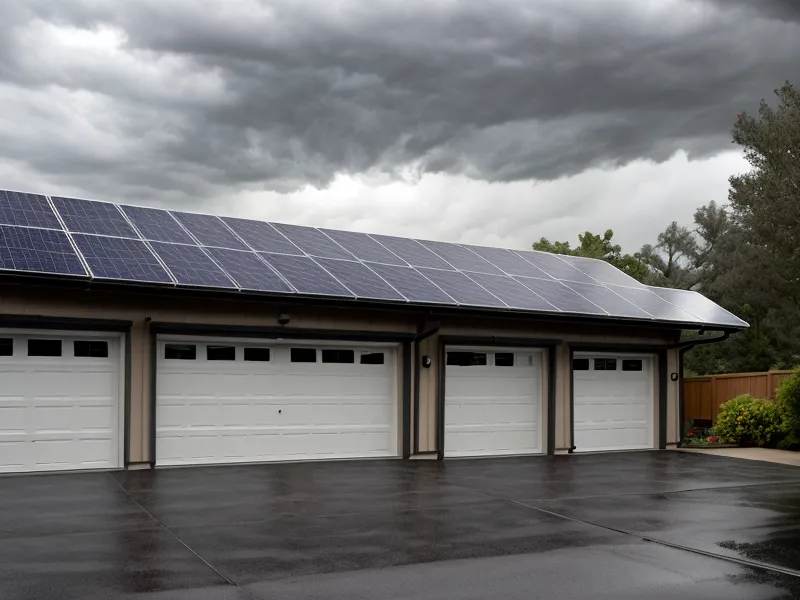
One outage cost us three days of client deadlines and a garage freezer full of ruined food. The next one cost us nothing at all. The fridge never blinked, the Wi-Fi stayed up, and I filed my invoices on time. That gap is the whole story of how we stopped just hoping to survive hurricane season and started actually building emergency backup power and energy independence for Houston living, one DIY project at a time.
Quick disclosure before we get into it: some of the links below are affiliate links, and if you buy through them we earn a small commission at no extra cost to you. We only mention backup power products our own family has actually tested through a real outage, not just unboxed for a review. Neither of us is an electrician or a doctor, so talk to a licensed professional about your own wiring and to your physician about any medical equipment.
The Myth: More Power Is Always Better
Here's the misconception that almost cost us a small fortune: that backup power means matching a generator to your whole electrical panel. It doesn't. Most of what a family actually needs to protect during an outage is a short list — a fridge, a laptop, a router, maybe a phone charger or two. Chasing a system sized for the entire house is how people either overspend or give up before they start.
For us, that short list had one non-negotiable item built in. Our youngest needs refrigerated insulin, and that storage window doesn't bend for anyone's budget or schedule. Medical needs like that jump straight to the top of any real priority list, which is its own conversation we won't try to cram in here.
Figure Out What You Can't Afford to Lose First
Before buying anything, sit down and make that list for your own household. Ours turned out smaller than we expected: the refrigerator compressor, my work monitors, the router, and the kids' tablet chargers. Working out exactly how many watts a refrigerator's startup surge demands is a rabbit hole on its own — we won't get into the math here, just know the number is bigger than most people guess.
Losing the Wi-Fi sounds minor, until you're the one emailing a client that a project is delayed. Entertaining two kids with no tablet and no patience left is no joke. Keeping a router and one laptop alive through an extended outage is honestly its own topic worth reading up on separately. And how far you take all this, from a single battery pack to something closer to full grid independence, sits on a real spectrum, not a switch you flip overnight.
Where the Cheap DIY Fixes Fell Apart
We didn't land on our current setup on the first try. Gas generators were the obvious answer. We hated them anyway. The noise carried across the whole cul-de-sac, and keeping stabilized fuel on hand felt like its own chore. Portable solar chargers looked promising until we realized they didn't have the muscle to start a compressor, let alone run one.
The low point was a DIY magnetic generator kit my husband ordered off a YouTube ad. It showed up as a box of unlabeled parts with no real instructions, and it never worked. A neighbor of ours who spends his weekends deep in woodworking projects in his home workshop took one look and just shook his head. My husband tried anyway, running an extension cord out to the garage until the cord itself ran warm enough to smell faintly of hot plastic under the load.
Modular or Integrated: Which One Actually Survives a Blackout?
That failure pushed us toward a bigger decision. Modular systems versus the all-in-one solar generators sold in every big-box store. Integrated units are convenient until the battery or inverter fails, and then the whole thing is dead weight — no repairing one part, just replacing everything. Modular setups take more space and more patience to install, but you add capacity as your budget allows instead of buying your ceiling on day one.
We built ours around the Energy Revolution System blueprints, which meant following step-by-step videos instead of hiring an electrician for every stage. It's a bit like moving beyond the flashlight and actually running a household instead of just surviving the night. Whether a battery bank like this is worth the assembly time compared to just running a generator is a fair question, one we've answered in more depth elsewhere. My husband put in real trial and error in the garage before the setup handled our fridge without tripping.
For the smaller stuff, the router, the tablet chargers, we added the Power Grid Generator, which is built around resonance energy recovery rather than a battery bank. Anything that sounds like free energy makes us skeptical by default, so we read the actual claims closely instead of trusting the headline. There's a real trade-off between staying quiet and putting out serious power, and layering a few smaller systems instead of one giant one turned out to matter more than we expected.

A Head-to-Head on the Three Options We Tested
Here's the breakdown, based on our own testing in actual Houston humidity, not a lab. The Energy Revolution System ended up the most reliable long-term answer for the home office setup, while something smaller like the Orgone Motor was enough to keep the insulin cooler running when we just needed backup in a pinch. We wrote up the longer version of both: our Energy Revolution System review, and a separate piece on why the Power Grid Generator holds up better for small electronics than a standard battery bank that slowly loses its charge.
| Product | Rating | |
|---|---|---|
| Energy Revolution System Top Pick | 9.4 | Read More → |
| Orgone Motor | 8.5 | Read More → |
| Power Grid Generator | 8.1 | Read More → |
Energy Revolution System
Pros
- ● Completely fuel-free operation for silent backup
- ● Scalable modular design grows with your power needs
- ● Excellent step-by-step video guidance for non-electricians
- ● Handles high-surge appliances like refrigerators
Cons
- − Requires manual assembly and some garage space
- − Initial setup is more complex than a portable box
Protect the Short List, Not the Whole Panel
The real proof came the morning after our last outage. I walked into the kitchen and made coffee without thinking twice, then remembered most of the block still had no power at all. Walking the dog past Clear Lake Park that afternoon, the outage looked like everyone else's problem, not ours anymore.
So here's the rule, stated plainly: don't shop for a system big enough to run everything, shop for a system built around the handful of things you truly cannot lose, and let it grow from there. If you're tired of guessing every time a storm forecast turns ugly, the Energy Revolution System blueprints are where we started, and they're still the backbone of our setup today. It takes real assembly time and a chunk of garage space, but for us, protecting that short list was worth every evening spent following the videos.
Nothing on this website constitutes medical, legal, or financial advice. All content is based on the author's personal experience and independent research. Consult a licensed professional for guidance specific to your situation.