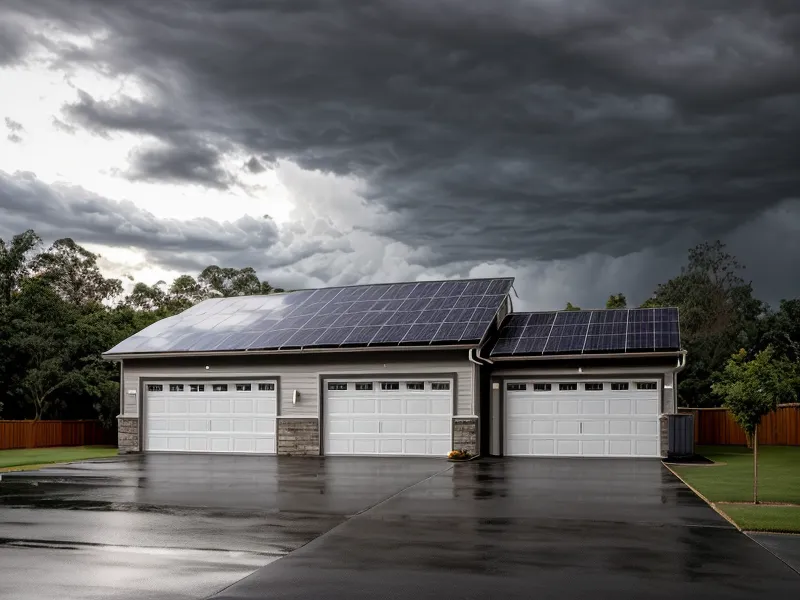
How many hours does a household actually need from a backup system before hurricane-preparedness stops being a checklist item and becomes something a family can genuinely rely on? We get asked some version of that question constantly, usually right after a storm watch shows up on someone's phone, and the honest answer depends entirely on what's actually plugged in, a detail most DIY backup power reviews skip past.
Quick disclosure before anything else: this piece contains affiliate links, and buying through them earns us a commission at no extra cost to you. Every product mentioned here has actually run during a real Houston outage in our own house, not just in a demo video.
The Category 1 Baseline We Plan Around
We don't wait for a monster storm to take backup power seriously. Even the weakest Category 1 hurricane — the bottom rung of that wind-speed scale — is enough to knock out a Houston-area grid for days, not hours. That's the baseline we plan around, not the worst-case scenario. The first hour after any outage is still just triage: check what's plugged in, check the fridge, check the medical cooler, and skip the panic entirely.
That triage matters more in our house than most, since our youngest needs insulin, and a compromised cold chain isn't something you can fix with an apology later. For families managing something similar, we've written a separate breakdown on getting no more melted insulin without babysitting a thermometer around the clock. Medical-load priority beats every other convenience gadget in our house, and it's the filter every product on this page had to pass first.
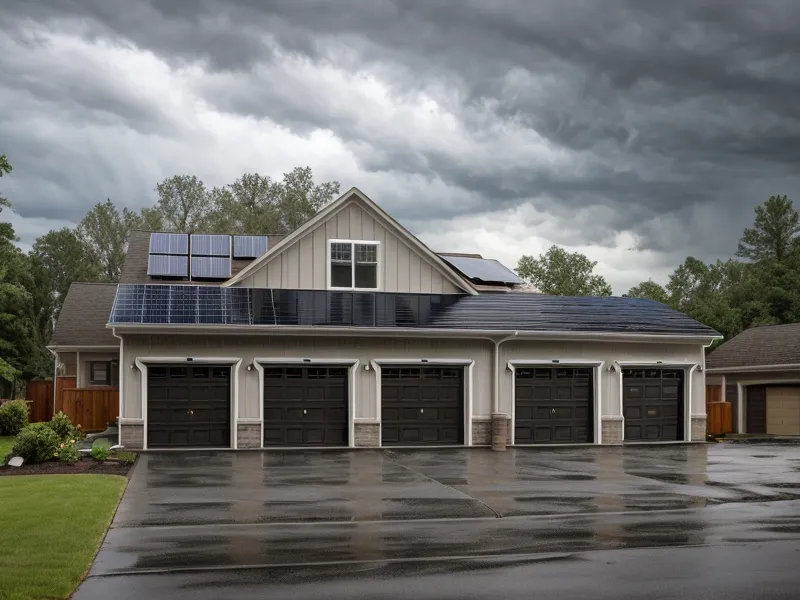
We Stopped Trusting a Gas Can as a Backup Plan
I remember finishing a client's file revisions past eleven o'clock the night Tropical Storm Harold rolled through — irritated by a stalled cursor, not particularly worried about the wind, right up until the power actually cut and both problems collapsed into one. We tried the obvious cheap fix first: running a laptop off the truck's twelve-volt inverter, engine idling in the driveway, until the fuel gauge told us exactly how short that plan really was — proof that fuel supply isn't something a family can actually count on when it matters most. That's when I stopped looking for a better gas plan and found the Energy Revolution System instead, a fuel-free build that doesn't care whether the gas station down the road has a line stretching to the street.
Before you buy anything, it's worth starting your off-grid power journey with a real look at what a battery wall costs versus a build like this one — we ran that battery-vs-generator comparison ourselves and landed here because the ongoing cost made more sense for our house than a bank of expensive cells. We also stopped trusting a marketing chart for runtime math and just added up our own numbers instead: laptop, modem, fridge, one box fan, done. That number is different for every household, which is exactly why nobody should copy ours.
What "Energy Independence" Actually Costs to Build
The Energy Revolution System is built around a magnetic coupler assembly — resonance-based principles that sound close to science fiction the first time you read the manual. Any claim that edges toward free energy gets real scrutiny from us before it earns a spot in the garage, and we went in expecting to be disappointed. We weren't, but that skepticism is exactly why we tested it through an actual outage instead of taking the sales page at its word.
The noise profile surprised us most, or rather the near lack of one compared to a gas engine running the same load. Going quieter came with a real trade-off in output, though, and that's worth knowing going in: quieter doesn't automatically mean stronger, and anyone comparing options should ask what a system gives up to get there.
Building It: Tools, Time, and a Second Opinion
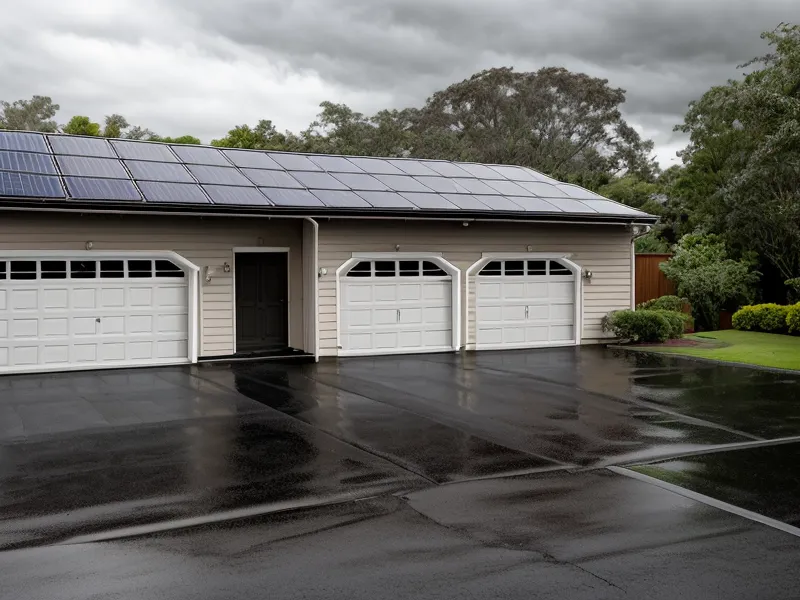
Assembly took a real afternoon, not a five-minute unboxing, and it needed basic tools most garages already have rather than anything specialized. None of it required an electrician, though installing a system like this one without a licensed electrician still has real limits. Know where those limits sit before you get anywhere near your home's main panel. My husband ran every stage of the test outside, on the slab behind our garage that's become our default proving ground for anything with a plug or a fuel line. Inside, the shelving finally makes sense too: one bin holds fuel stabilizer, another the tangle of extension cords, a third whatever transfer-switch hardware isn't currently in use — because digging for the right piece during an actual storm warning is too late.
Brock, who assists my husband coaching our son's little league team, won't recommend a single product he hasn't personally watched fail on some job first — so when he looked over the finished build and had nothing to complain about, that told us more than a spec sheet could. A reader named Selene in Katy wrote in asking what apartment dwellers are supposed to do, since most backup power guides assume a driveway and a garage neither renters nor apartment residents have. For her situation, the compact Orgone Motor makes more sense than anything full-sized — smaller footprint, lower output, built for keeping the essentials running rather than a whole house. We think in tiers now instead of betting everything on one box: something small for an apartment or a studio, something larger for a house that's running a home office and a fridge that can't afford to warm up.
Lauren's home office runs on dual monitors backed by a small battery unit that buys just enough time for the bigger system to take over — the first thing either of us checks after any new backup passes a test.
Which Backup Option Actually Fits Your Household?
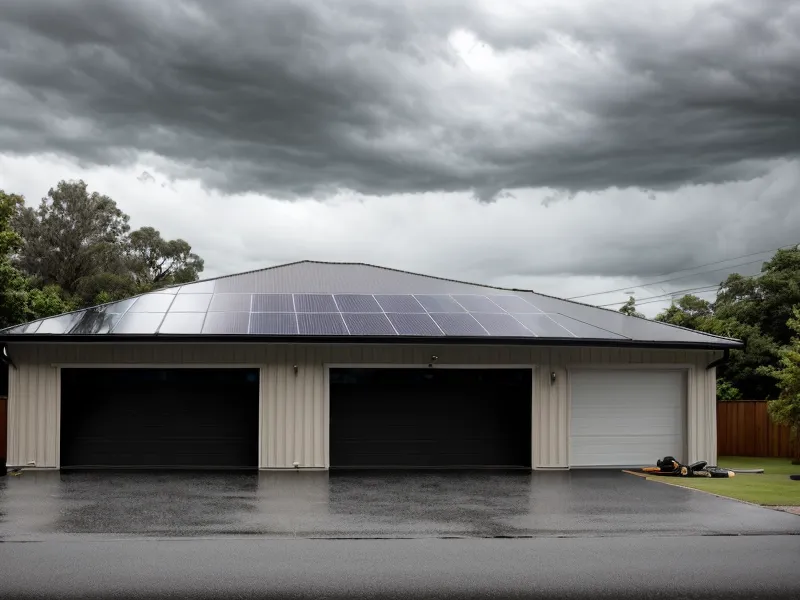
Picking between three options is a lot like comparing insurance policies — the cheapest one covers the least, and you usually only find out how little during the exact event you bought it for. We're not chasing full grid independence, either; we sit somewhere in the middle of that spectrum, which is realistic for a family and not a homestead. If a full build fits your situation the way it fits ours, you can look at the same blueprints we used right here.
On the other end sits the Power Grid Generator, built around a different resonance energy recovery approach and priced for a much lower budget floor. Every budget floor comes with a trade-off, and this one is newer with a thinner track record, so its performance claims deserve the same personal verification we'd want for anything unproven. It's a reasonable entry point if a phone charger and a single lamp are genuinely all you need to get through a night.
Ask These Questions Before You Buy Anything
None of this earns a permanent spot in our garage without more than one season of testing behind it. A single good outage doesn't prove reliability any more than one sunny forecast proves a hurricane won't form. We've got a small sensor on the back fence that's been tracking wind and humidity here longer than any of these systems have been tested, so when we talk about what a unit needs to survive, that's based on actual readings, not a guess. One more thing worth saying plainly: neither of us has medical training, and if your household depends on refrigerated medication, talk to your own doctor about backup requirements specific to your situation, not just to a product review.
Storm season comes back every year whether we're ready or not, and the version of us that used to panic over every flickering light doesn't exist anymore. If two blackouts were enough to change how our family handles power, one bad forecast might be enough to change how yours does too — here's the full story of building your own backup power from where we actually started.
Energy Revolution System
Pros
- ● No more hunting for gasoline during shortages
- ● Quiet enough to run in a garage without waking neighbors
- ● Powers both sensitive electronics and medical fridges
- ● Complete video guides make assembly manageable
Cons
- − Requires a few hours of assembly time
- − Needs basic tools you might not have on hand
Nothing on this website constitutes medical, legal, or financial advice. All content is based on the author's personal experience and independent research. Consult a licensed professional for guidance specific to your situation.