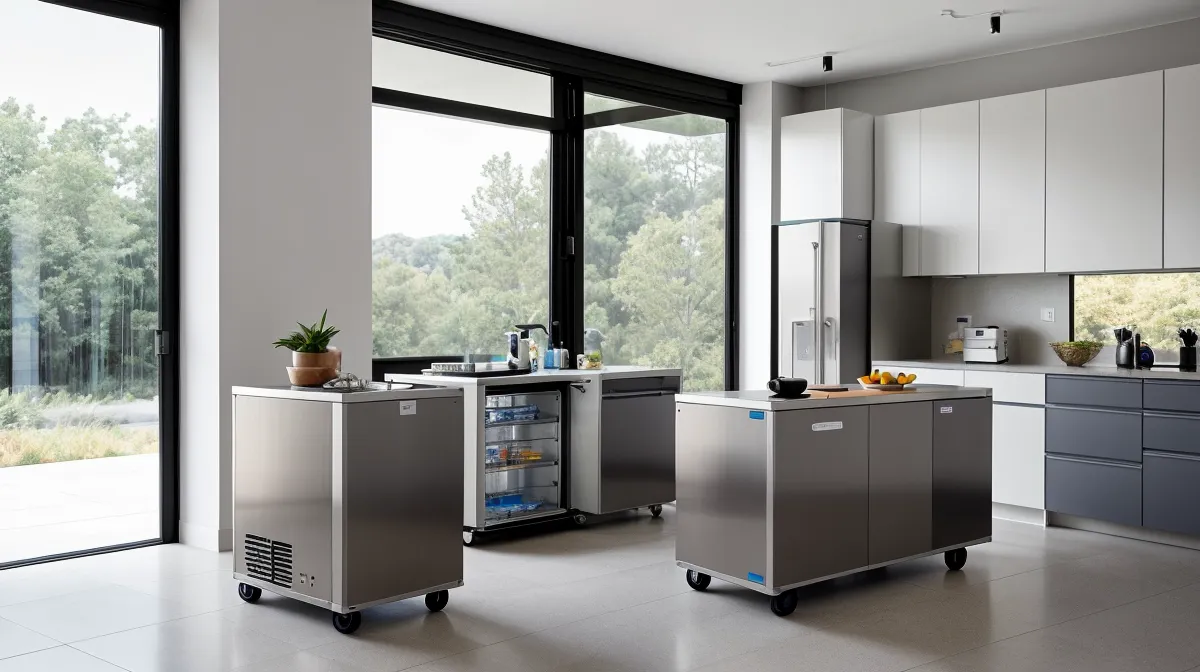
Diesel doesn't wash off in one try. It clings to your hands for hours after you've topped off a tank in thick August heat, sweet and sharp at once. That smell used to be the price of admission for backup power in our house, and it's exactly why we stopped running a gas engine at all. The short answer to the question we get asked most: a portable power station — the battery-based, "power grid" style units, not a gas engine — is the single upgrade that changed how our family handles home backup power and emergency preparedness once the lights go out.
Keeping Medication Cold Without Guessing
Our youngest needs insulin kept at a specific insulin storage temperature, and that fact drives almost every backup power decision we make. He's the one who checks the fridge thermometer first during any outage, before the router, before anything else. A power station that can hold a compressor running through the night matters more to us than any other feature on the spec sheet.
People ask which appliance should get priority when a battery can't run everything at once. That's a longer conversation than one section can hold, and it deserves a full answer of its own rather than a rushed one here. What we will say: medical equipment goes first, always, ahead of convenience. We are not medical professionals, and anyone managing a condition like this should check specifics with their own doctor rather than a backup-power blog. Our job was just making sure the compressor never stopped.
How Much Home Backup Power Does a Suburban House Really Need?
Texas runs its own power grid, separate from the rest of the country, which is part of why our outages tend to run longer than what friends in other states describe. Once you understand that the grid here is its own island, you stop assuming help is coming fast and start planning like it might not.
Working out the exact wattage math for every device in the house — running watts, surge watts, hours needed — is its own project, and honestly a bit of a rabbit hole. We won't attempt that full breakdown here. For a typical suburban household, the practical target is smaller than people expect: the fridge, a couple of fans, the router, and someone's laptop or workstation. Trying to run the whole house is how people end up disappointed with a portable unit that was never built for that job.
Battery Chemistry Nobody Explains Well
Not all batteries inside these units are the same, and the difference matters more than the total watt-hour number printed on the box. We specifically looked for LiFePO4 chemistry over older lithium-ion designs, mainly because it carries a meaningfully lower risk of thermal runaway — the kind of battery failure you never want happening inside your living room.
Longevity matters too. A well-built unit should hold onto most of its capacity through years of occasional storm use and the odd camping trip, rather than fading fast after a couple of seasons. We won't quote exact cycle numbers here, since that figure varies by manufacturer and how the unit gets treated, but ask for it directly before you buy — a company that can't answer clearly is telling you something.
What We Tried That Didn't Work
Before we landed on a power station, we ordered a DIY magnetic generator kit off the back of a YouTube ad promising unlimited free energy. It arrived as a box of loose parts with instructions that assumed skills neither of us had. It never ran. It sat in the garage for months before we finally admitted it wasn't going to happen and gave up on it for good.
Gas generators were the other route we tried first, and they solve the power problem while creating a different one. Ours ran, technically, but a neighbor down the street — the one who spends his weekends on woodworking projects in his home workshop — came over more than once, only half-joking, to ask if we could point the exhaust the other way. Weighing engine noise against battery quiet is a real trade-off, worth its own comparison before you pick a lane; for our street, with kids and neighbors close by, quiet won. We wrote more about walking away from gas entirely in an earlier piece, if you want the longer version of how that shift happened. Whether a battery system actually beats cheaper alternatives dollar for dollar is its own longer conversation too, one that depends heavily on how often your area loses power.
Bigger Battery vs. Faster Recharge: The Trade-Off
Most advice says buy the biggest battery you can afford. We'd push back on that a little. A massive battery still hits zero eventually, and if it recharges slowly, a multi-day outage will find that limit fast. It's a bit like buying home insurance for the wrong risk — paying extra for size when what actually protects you is how quickly the coverage kicks back in. We'd rather have a mid-sized unit that accepts a strong solar input and tops back up fast during the handful of sunny hours between storm bands.
That rhythm — drain overnight running the fans and the fridge, refill hard through the morning — has worked better for us than staring at a huge battery bank crawling back to full. Pure sine wave output mattered too, since sensitive equipment like a design workstation and monitors don't tolerate rough power the way a lamp or a fan does. Cheaper, "modified" power can quietly damage electronics over time, even when everything still turns on.
Installing It Without Calling an Electrician
Neither of us is an electrician, and we were not about to become one just for this. Getting one of these running is meant to be plug-and-play for a reason — you're not rewiring anything, you're rolling a unit over and plugging things in directly. That said, how far you take the setup yourself, versus when it's worth a professional's opinion, is worth thinking through carefully rather than guessing at.
Look for a display that tells you runtime in plain hours based on what's actually plugged in, not just a raw battery percentage. It turns the whole exercise into simple math instead of a guessing game, and it's the one feature that made our kids actually understand what was happening during a storm instead of just asking when the WiFi would come back.
How Independent From the Grid Do You Actually Need to Be?
There's a wide spectrum between "keep the fridge running for a weekend" and full energy independence, and most families land somewhere in the middle rather than at either end. We've written elsewhere about the myths we had to unlearn on our way to figuring out where we actually sit on that spectrum, and it's worth a read before you decide how big a system to buy.
One afternoon stands out more than the ice storm ever did. I was elbow-deep in a client's design files when the power flickered, and the station picked up the load so cleanly that I didn't notice for a good twenty minutes — no flashlight scramble, no dead monitor, just an unsaved file that stayed unsaved and safe. That's the whole goal, really: not some dramatic independence from the grid, just enough backup that a storm doesn't get to decide whether we make our deadlines.
We still check the forecast before a big storm rolls in, and some weekends still end with a drive out to Galveston Seawall Boulevard once the weather clears, just to remember why we live here despite the hurricanes. The generator conversation used to feel like an emergency every single time. Now it's closer to routine maintenance — batteries topped off, fuel stabilizer checked, done.
Nothing on this website constitutes medical, legal, or financial advice. All content is based on the author's personal experience and independent research. Consult a licensed professional for guidance specific to your situation.