The movie freezes mid-scene, the router light blinks out, and for a second nobody in the room moves. Then I'm already crossing to the hallway closet before the AC even finishes its dying whir. This is what emergency preparedness looks like after enough storms: no panic, just apartment living turned into a backup power routine, a battery backup station pulled out from behind the winter coats like it's nothing.
We live out near Katy Mills, west Houston, close enough to the Gulf that every storm season turns into a live drill. Four years of testing everything from cheap power banks to full battery stations taught us the fix has almost nothing to do with generating electricity and everything to do with storing it quietly enough for shared walls and thin floors.
Why a Gas Generator Never Makes the List for Apartment Living
Fire codes and basic physics rule out gas before price ever enters the conversation. Most guidance out there assumes a backyard exists somewhere nearby — ours doesn't. A generator needs real clearance from windows, doors, and vents, and a ten-foot balcony can't provide it, no matter how you angle the thing. Gas generators also trade quiet for raw power output, and in a building with shared walls and a landlord's number on file, that's not a trade we get to make.
I dug into the fire code details before finishing my first client email that morning. Research and budget tracking are my part of this puzzle, if only because freelance income doesn't arrive on a predictable schedule. Municipal rules and standard fire-safety guidance agree on one thing: keep any combustion engine well clear of anything with a vent or a return air intake. On a shared hallway with several other units, there's no configuration that satisfies that, so gas came off the table before we ever priced out a single unit.
The Closet-Sized Battery Setup That Replaced Our Generator Plans
Before any of that, we ordered a DIY magnetic generator kit off a late-night YouTube ad, the kind promising free electricity from a spinning motor with no fuel and no plug. It arrived as a box of loose parts with instructions that assumed knowledge we didn't have, and it never worked. Not once.
Cheap power banks were the next disappointment. During a freeze earlier this year, a pair of high-end laptop banks died in a matter of hours just keeping phones and one tablet charged; nowhere near enough for a router and a design workstation. Whether a battery bank actually beats a cheap gas generator dollar for dollar is its own long argument, one we won't settle here, but for apartment living the noise and fumes made the choice for us regardless of cost.
What finally worked was switching to LiFePO4 power stations, heavier than the lead-acid batteries our parents used in the garage, but stable enough to trust indoors, and built to outlast a typical apartment lease many times over without the capacity dropping off a cliff. We didn't set out to build a tiered backup system, but stacking a few of these smaller units instead of buying one giant station is basically what tiered redundancy means in practice, and the full case for that layering deserves its own separate read. A friend of ours does woodworking projects in his home workshop, and he says the same logic applies to tools: buy what actually fits the job in front of you, not the biggest version you can justify. Figuring out the exact wattage math for your own outage list is a rabbit hole we're skipping here; that's a separate calculation, not a feeling.
Keeping Insulin Cold Without Running the Whole Fridge
He handles this part of the plan, and he treats it like the whole point of the exercise. Our youngest depends on refrigerated insulin, and a full-size kitchen fridge is a battery killer — it drains a mid-sized station in a few hours trying to hold both the fridge and freezer compartments cold. Deciding exactly which medical equipment gets first claim on limited backup power is its own decision tree, one worth working through with whoever manages that care in your house rather than guessing from a blog post.
The fix was a small dedicated 12-volt fridge, the kind built for road trips, running off its own battery instead of competing with the kitchen. We're not doctors and won't pretend to know your household's exact storage requirements. Talk to your own physician or the manufacturer about that range, not us. What we can tell you is what changed for our family: last storm, the kids were parked in front of a movie with rain hammering the windows, and neither of us got up to check on the battery in the closet. That's when the setup earned its keep — not with an alarm or a crisis, just quiet enough that nobody thought to worry.
Solar Panels, Router Power, and the Rest of the Apartment Checklist
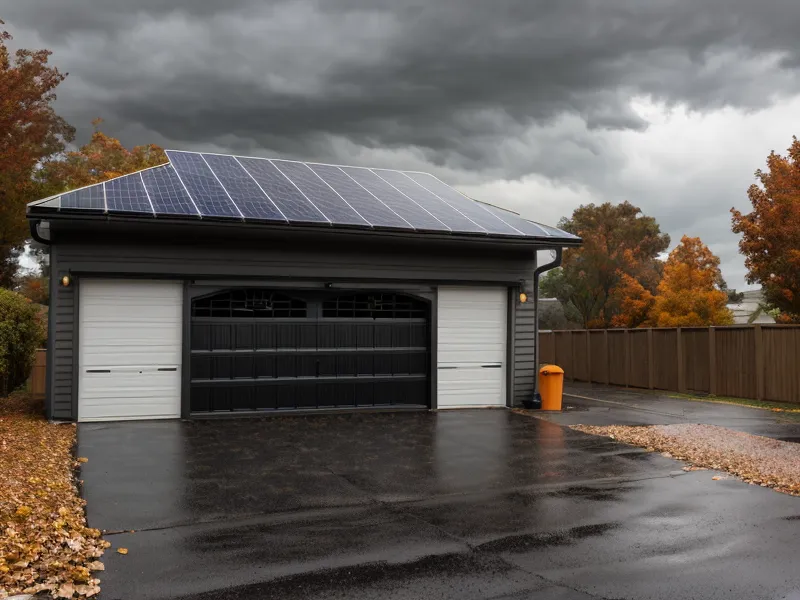
Solar sounded like free money until we actually tested it. Panels propped behind a double-pane apartment window produced barely anything. The coatings that keep summer heat out also block the wavelengths panels need, and without a legal way to mount one outside, solar isn't a real backup power option for most renters. We stopped chasing it and treated the wall outlet as the only fuel source that matters, charging early whenever a storm entered the Gulf and looking for units with pass-through charging, so a battery could run devices while still topping off. There's a whole spectrum between "topped off in a closet before landfall" and true energy independence, and a rental sits firmly on the modest end of it — which is fine, since modest is what actually fits inside a lease.
If you're starting from nothing, our notes on Houston-proofing a home without spending much at all cover the cheap first moves before anything like a full battery bank. Keeping the internet alive turned out simpler than expected once we stopped overbuilding for it. I need the router alive before I need almost anything else; deadlines don't wait for a storm to pass, and the router is one of the easiest things to keep running, usually the first thing people give up on. We wrote more about that specific setup in powering a Wi-Fi router and laptop during extended blackouts, so client work doesn't depend on a phone's data hotspot. None of this requires an electrician, either — some whole-home standby systems genuinely do need a licensed pro and a permit, but a plug-and-play closet setup like ours was never that kind of project.
Test the Noise Before You Trust the Silence
Renting means testing before committing, the same way you'd test-drive a car before trusting the brochure. Measure the actual space first — a closet shelf or under-bed gap — since LiFePO4 units are heavy enough that you don't want to discover that after delivery. Run any battery station in the room where you'll actually use it and listen for fan noise before you're stuck with something loud enough to keep a small apartment awake. Skip anything marketed as free or limitless energy from a gadget instead of a battery. After the magnetic generator kit, we treat those claims with real skepticism and a hard pass. We got curious enough about one alternative option to look closer, and wrote up our take on a small device that earned more trust from us than we expected, mostly because we went in ready to dismiss it.
What to actually do in the first hour after the power drops is its own checklist, and not the one we're writing today, but it's worth keeping taped inside a cabinet regardless of what backup gear you own. Budgeting for backup power isn't that different from budgeting for anything else that only matters on the worst day — home insurance, a spare tire, a fire extinguisher nobody thinks about until they need it. You buy it before the storm, not during.
The next storm that rolls in off the Gulf won't change much for us anymore. We'll reach into the closet, flip a switch, and let the lights come back at their own pace instead of scrambling for ice or a working outlet. If you take one thing from all of this: skip whatever promises the most power for the least effort, and build the smaller, boring setup you've actually tested; that's the version that works when it counts, not the one that looked best in an ad.
Nothing on this website constitutes medical, legal, or financial advice. All content is based on the author's personal experience and independent research. Consult a licensed professional for guidance specific to your situation.