
Running an entire house on stored power and running three or four essential things in that house are two completely different projects. Different costs. Different skill requirements. Different failure points. Most families putting together an emergency plan for hurricane backup power treat those as one decision. They aren't. Home energy independence during a blackout isn't a single purchase. It's a spectrum that runs from a flashlight in a kitchen drawer all the way to a fully solar-charged battery system, and where a household actually needs to sit on that spectrum depends on what has to keep running, not on what looks most impressive parked in a garage.
She: My work doesn't pause because the grid does. Design deadlines from clients in other time zones don't care about a blown transformer down the street, and during our worst stretch without power I lost three straight days of billable hours staring at a dead monitor. Emergency planning that only covers ice and flashlights misses half the problem for anyone who works from home.
He: I still think about checking my phone from the garage on the third day of that same outage and finding a note I'd left myself that morning: insulin fridge, thirty-seven degrees, still holding. That's not a number you want to be tracking by hand in a family with a kid on refrigerated medication, and it's the reason we stopped treating backup power like a hobby and started treating it like infrastructure.
The Grid-Independence Spectrum: Five Levels of Backup Power
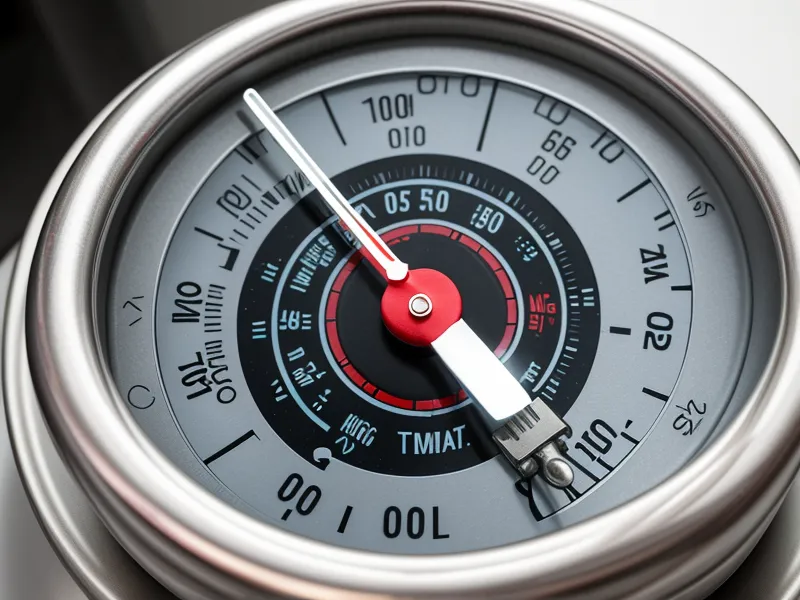
Before buying anything, picture backup power as a ladder, not a single product. At the bottom, there's nothing at all: just riding out a short outage on whatever's already in the fridge and a phone battery. One rung up is pocket-level backup: power banks, a hand-crank radio, maybe a cooler of ice. Enough for an evening without much stress. Think of it like packing for a road trip: you don't load the car with everything you own, just what you'll actually use.
The next rung is targeted circuit backup, and that's where most households actually belong. A portable battery station or small generator, sized to run a short list of chosen loads — a refrigerator, a medical cooler, a Wi-Fi router, one workstation — for as long as the outage lasts. Above that sits whole-home backup, where a transfer switch hands most of the house's circuits over automatically. At the very top is full energy independence: enough solar generation and storage that the grid becomes optional. Almost nobody needs that top rung for hurricane season. Most families just need to get honest about which rung actually solves their problem.
He: Some of these tiers are simple enough to set up in an afternoon with a regular outlet strip, though a whole-home transfer switch is a different job entirely — one worth reading up on separately if you're not doing it yourself.
Most Households Don't Need Whole-Home Backup Power

She: When we first got serious about this, I did what most people do and started pricing out the biggest battery systems I could find — units the size of a refrigerator, costed out like a used car. I built spreadsheets comparing watt-hours to what we'd have to spend to run the whole house for a week. Then I realized we were solving the wrong problem first.
He: Our house was leaking cooled air out of a poorly sealed attic, which meant any air conditioner we backed up would be fighting a losing battle no matter how big the battery behind it was. We sealed the thermal envelope first — attic insulation, weather-stripped doors — before we spent a dollar on batteries. Once the house held its temperature longer, we didn't need to run cooling for ten hours of an outage. Three was enough. That single change shrank every battery estimate we'd been pricing out.
Narrowing the problem down further meant asking a blunt question about every 120V outlet in the house: does this actually need to stay on? Not the dishwasher. Not the dryer. Just the refrigerator, the internet router, one workstation, and the medical cooler. Once that list was short, the rest of the decision got a lot cheaper and a lot less complicated.
So Which Tier Actually Fits Your Family?
Pick a tier by starting with what can't fail.
He: Picking a tier starts with medical and safety loads, full stop — if someone in the house depends on refrigerated medicine or powered equipment, that circuit gets first claim on whatever backup you buy, and the deeper reasoning on how to prioritize those loads deserves its own read rather than a paragraph here.
She: After that, it comes down to arithmetic most people skip — how many watt-hours (basically, how much energy a device eats per hour) your short list of devices pulls over a typical outage in your area, a calculation worth doing carefully instead of guessing.
Cost isn't the only trade-off between a generator and a battery system, and the two really deserve a side-by-side comparison of their own rather than a verdict buried in this article. Noise is part of that math too — one neighbor ran his gas generator through two straight days of rain during our second outage, loud enough to hear over the storm from our own porch, and then it just went dead quiet the moment he ran out of fuel to feed it. That kind of silence is its own kind of stressful, different from watching a battery's charge tick down on a screen.
She: For sensitive electronics — my monitors, my workstation, the medical cooler — the kind of power a power inverter puts out matters more than people expect, and that comparison deserves its own deep dive rather than a paragraph here.
Building The System We Actually Use
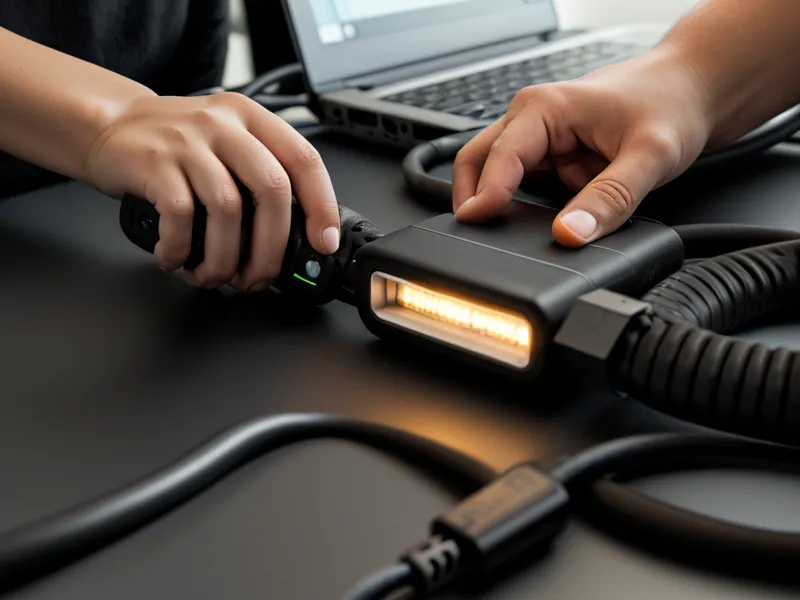
He: In practice, our setup lives in two tiers. Tier one — life and livelihood — covers the medical cooler, the Wi-Fi router, and one workstation, all running off a single portable battery station we keep charged year-round. Tier two — comfort — is smaller power banks for phones, a couple of rechargeable fans, and a solar lantern or two so the kids have something to read by when a storm knocks out the lights.
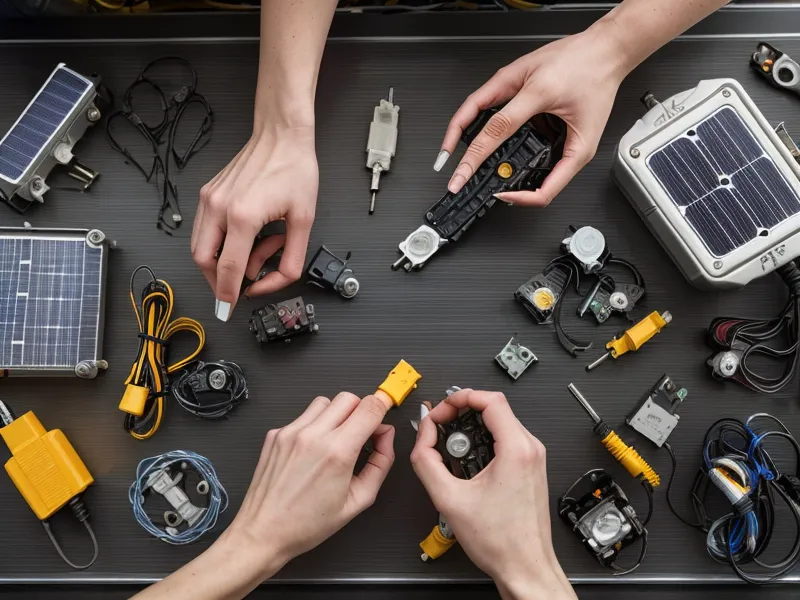
Not everything we tried earned a place in that setup. One early purchase was a DIY magnetic generator kit pitched hard in a YouTube ad, the kind of thing we picked apart more carefully later in Orgone Motor vs Magnetic Generators for Reliable Emergency Home Power — it arrived as a box of unlabeled parts that never assembled into anything that produced usable power. Lesson learned: if a backup power product's entire pitch lives in a video ad and nowhere else, treat that as a warning sign, not a shortcut.
She: We keep a running list of exactly what each tier-one device draws, the same list we mapped out device by device in The Houston Blackout Reality: What We Actually Needed After Two Long Weeks Without Power, and it's the difference between a battery that lasts through a whole outage and one that quietly dies on day two.
He: We also weighed a permanent whole-house generator against staying with a portable, tiered setup, a comparison that gets a full breakdown of its own in a DIY solar setup was better for us than a whole-house generator. For our situation, the portable route won out because it travels with us and can be lent to a neighbor in a pinch, which a system bolted to a concrete pad never could.
What We'd Tell Any Family Starting From Zero
She: If you're starting from nothing, don't start with the biggest battery on the market. Start by listing the handful of things your household truly cannot lose power to, add up what they draw, and buy backup sized to that list — not to an imagined worst case that never actually plays out the way you picture it.
He: We still check the weather obsessively during storm season, and I still glance at the medical cooler out of habit more nights than not. What's changed is what happens next. The lights go out, I walk to the garage, flip on the tier-one battery, and get back to being a parent instead of standing in a driveway arguing over the last gas can at a station. That's the whole point of the grid-independence spectrum: not living off it entirely, just choosing the rung that actually matches your family.
Nothing on this website constitutes medical, legal, or financial advice. All content is based on the author's personal experience and independent research. Consult a licensed professional for guidance specific to your situation.