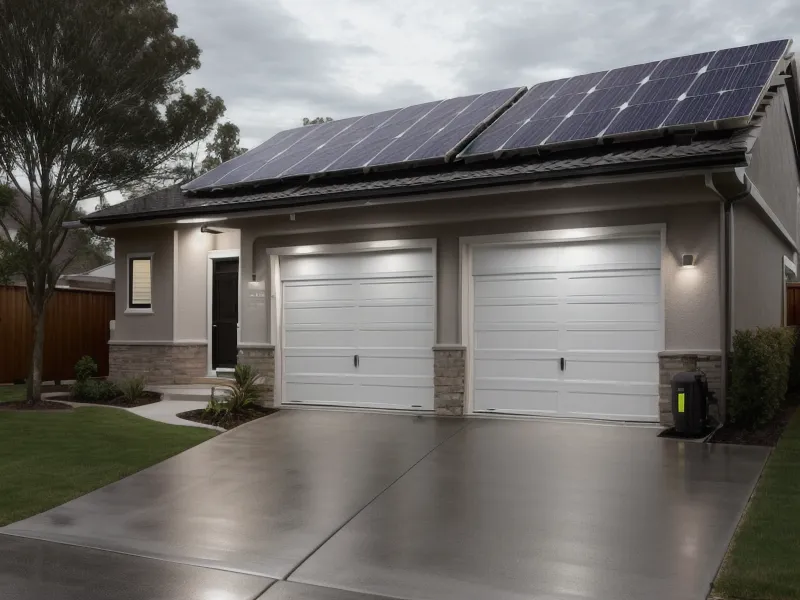
Everyone has one thing in their house that cannot lose power, not even for an hour, but every family in hurricane country names it differently. For us, it took two back-to-back outages to land on ours.
For us it's an insulin fridge most weeks, and whatever client file happens to be due for the other one. I'm a freelance graphic designer, my husband coaches little league, and after our second extended blackout in the same year we stopped hoping the grid would hold and built what we now call a tiered backup plan — small, dedicated power for what truly can't wait, bigger fuel-based backup for everything else. Emergency power doesn't have to mean one giant generator and a five-figure install. Hurricane-prep, done right, looks a lot more like building an emergency fund: a little at a time, in order of what actually matters.
We used to assume the ERCOT-managed grid would hold through a bad storm season. Two outages back to back cured us of that, and this piece lays out the tiered, redundant backup plan we built afterward — not a doomsday bunker, not a five-figure whole-house system, just tiers that match what our family actually needs.
How Much Emergency Power Does a Family Actually Need?
Short answer: probably less than the big-box store wants to sell you. A whole-house generator solves the disruption problem completely, and that's a fine goal if the price tag and the maintenance schedule both fit your life. Ours didn't fit at all.
We wrote a longer breakdown of how after two Houston blackouts, we finally found a budget-friendly way to keep the lights on, if you want the receipts on what we actually bought first and what we returned.
There's a whole spectrum between fully tied to the utility company and fully self-sufficient, and figuring out where your household actually needs to land on it is a bigger question than any single article can settle — it depends on your health needs, your budget, and how much noise your neighbors will tolerate. What we can tell you is what happens when you skip that question entirely.
During our first outage, we ran an extension cord from a neighbor's gas generator two houses down — a friendly offer, gratefully accepted, and a genuine mess once we actually measured how much cord was crossing two lawns and a drainage ditch in the rain. It worked, technically, for a while. We never did that again, and "borrow power from whoever has it" is not a tier in our plan anymore.
Rain hammering the roof, the kids parked in front of a movie, everyone fed and fine, but it still took us a solid twenty minutes to remember neither of us had checked whether the generator outside actually had fuel in it. That gap is what a tiered plan closes. Not more gadgets. Fewer things to forget.
Generator or Battery First: Picking Your Starting Tier
Whether a generator or a battery station should come first is its own rabbit hole, and we've gone deep on that comparison elsewhere. Medical needs made the choice easy for us. Batteries, always, for the tier that genuinely cannot wait.
We use a portable power station built on LiFePO4 chemistry — a sturdier, longer-lasting battery type — for that tier, mainly because it doesn't ask for the upkeep a fuel tank does. No stabilizer, no stale gasoline smell in the garage, no starter cord to pull in the rain at 2 a.m.
Exactly how you rank a medical device against a phone charger against a modem is its own checklist, and for us it was never really a debate. The fridge that holds insulin wins every single time, and everything else in that tier exists to support the people keeping that fridge running, not the other way around.
What About Apartments Without a Garage?
A reader named Selene Krakowski found us through a local Facebook group after a winter storm knocked out power across her stretch of the Katy Mills area in west Houston. She lives on the third floor of an apartment complex, and every backup guide she'd read assumed she had a driveway and a garage to work with. She doesn't. Neither do a lot of people.
Our answer for her was the same as our answer for Tier One in any house: skip combustion entirely. No gas generator, no propane unit, nothing that burns fuel and produces exhaust belongs on a balcony or inside a unit with shared walls and a single stairwell for an exit. A battery station charges from a wall outlet ahead of a storm and runs quietly indoors, which makes it the only realistic option for anyone above the ground floor.
Selene wrote back a few weeks later, bluntly, which we've come to expect from her by now, to report that the battery kept a modem, a couple of phones, and a small fan running through the rest of that evening's outage, and that her building's fire escape plan mattered more than she'd expected once she actually thought it through. Check your own building's rules before you buy anything, since some complexes restrict even battery units on balconies.
Keeping the Home Office Running When the Power Doesn't
Losing three days of client work isn't just lost hours. It's the awkward email explaining why a deadline slid, and the quiet worry about whether that client books you again. My office tier exists to prevent that email, not to run the whole house.
Figuring out how many hours a given battery actually buys a laptop and a monitor is a math problem worth doing on paper before you buy anything, not a guess based on the number printed on the box. If you want exact wattage figures instead of our general rule of thumb, we laid them out in a real-world guide to keeping the fridge running during an outage, which walks through the same runtime math applied to a different appliance.
For the office tier specifically, we sized the battery to cover a full workday, not a full outage. Once it runs low, the plan shifts to triage: save files, step away from the desk, come back when there's more charge. That's a harder discipline than buying gear, but it's the one that actually keeps deadlines from sliding.
Loud, Quiet, or Silent: The Trade-Off Nobody Mentions
Every generator conversation eventually turns into a noise conversation, whether you bring it up or not. Neighbors who are already stressed by a storm don't need an engine roaring from your driveway for days on end, and that's before you factor in exhaust placement, fuel storage, and how close the unit sits to a bedroom window.
We run that generator on propane instead of gasoline now, mostly because a tank that's sat in the shed all year still works the moment we need it — no stabilizer, no gummed-up carburetor to worry about after months of not touching it. It's not silent. Nothing that burns fuel is silent. But it's quieter than the gas model we started with, and it doesn't leave that sharp fuel smell hanging around the garage for a week afterward.
Trading noise for horsepower, or horsepower for portability, is its own list of trade-offs, and we won't pretend one generator class wins every category. What we will say: decide how much noise your household and your neighbors can actually tolerate before you buy anything, not after the first thunderstorm rolls in and the lights flicker.
Do You Need an Electrician to Start?
Not for the first tier, no. A portable, plug-in battery station, or a generator you wheel out and connect with an extension cord, doesn't touch your home's wiring at all, which is exactly why we started there. Anything permanently tied into the house's electrical panel is where DIY stops and a licensed electrician starts, and that line matters more than it might seem.
My husband ran our setup past Brock Fuentes before we went any further — his assistant coach on our son's little league team, and a licensed plumber with an opinion about every pipe and panel in a house, which makes him equal parts useful and exhausting to ask a simple question. Brock's answer was the same every time: start with the smallest thing that solves the actual problem, and use whatever's already sitting in the truck before buying something new.
None of this requires a bunker mentality or a five-figure budget. Start with the tier that genuinely cannot fail: a fridge, a phone, a medical device. Build outward only as far as your household actually needs. A family that's tested a few wrong answers along the way isn't behind. It's just further along than the family that hasn't started yet.
Nothing on this website constitutes medical, legal, or financial advice. All content is based on the author's personal experience and independent research. Consult a licensed professional for guidance specific to your situation.