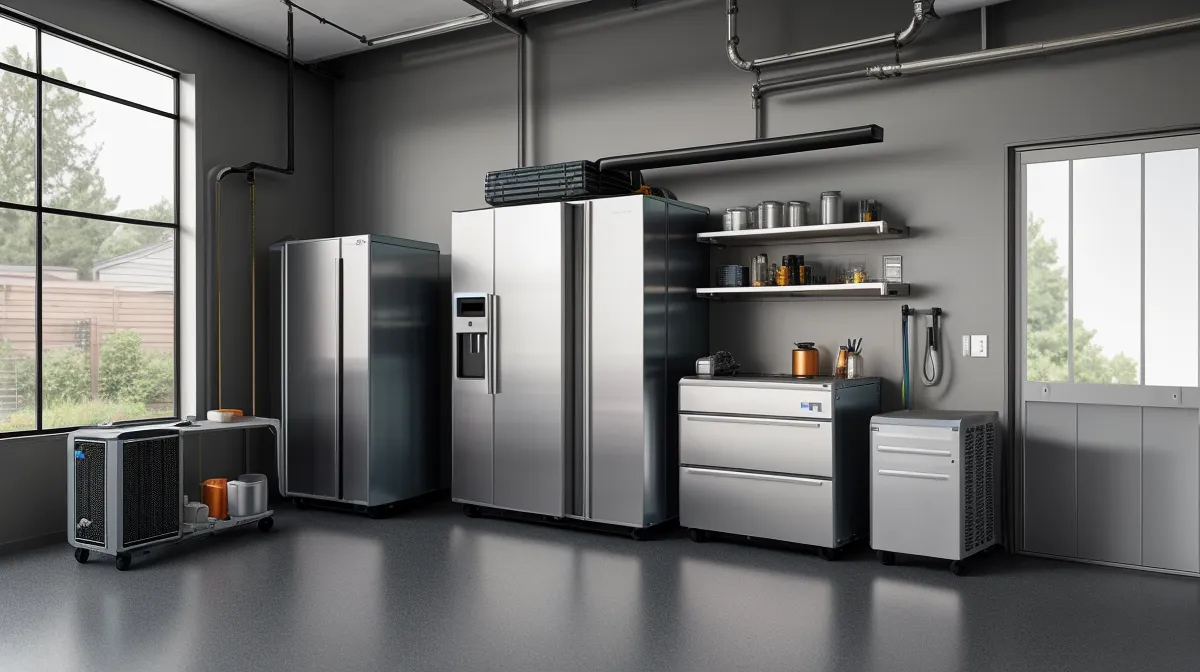
The insulin fridge holds its temperature. The CPAP keeps its rhythm. Everything else in the house — the porch light, the router, the ice maker — can sit dead for hours, because that's the whole idea behind medical backup power: a handful of devices don't get a vote in what happens during an outage, and everything else does.
Most families start backup planning by asking how big a generator they need. Wrong question, for a house with a serious medical load. The better one — the one that actually protects a kid's insulin supply or a parent's CPAP — is which specific devices cannot lose power, for how long, and what happens to a person if they do. That's medical load prioritization: the part of home energy security and emergency preparedness that has nothing to do with wattage and everything to do with which devices actually earn a spot on the list.
Medical Backup Power Starts With a Priority List, Not a Wattage Number
Insulin storage is the clearest example in our house. It needs continuous, unbroken refrigeration — not "usually cold," not "cold most of the time." A CPAP machine is different: it only matters overnight, but during those hours it's just as non-negotiable. Emergency preparedness gets sloppy when families treat those two needs the same way they treat a porch light or a coffee maker, because the cost of failure isn't the same. A porch light going dark costs you nothing. A gap in refrigeration costs you a supply of medication.
We sort every device in the house into three tiers now. Tier one is continuous medical load — things that must never lose power, full stop. Tier two is scheduled-critical: equipment that's non-negotiable but only during specific hours, like a CPAP overnight. Tier three is everything else, ranked by how annoying it is to lose, not how dangerous. That ranking, done honestly, is most of what "choosing the right generator" actually means for a medical household. The wattage number matters far less than most people assume once the priority list is built correctly.
Which Devices Actually Belong on the Priority List?
Continuous medical refrigeration is the obvious one, insulin included. Respiratory equipment is the second, and it's easy to underestimate because it only runs part of the day. Anything that monitors a health condition in real time belongs on the list too, even if it barely draws any power, because the cost of it losing power isn't measured in watts. What any specific device actually requires is a question for a doctor or medical equipment provider, not a backup-power article — but the logic of ranking it above the porch light holds no matter which device sits at the top of your own list. A neighbor of ours, Dwight, has a son who relies on a home oxygen concentrator, and he's worked through nearly the same priority list we have, just with different equipment at the top of it. He doesn't say much about what that's actually like day to day, but every lesson he's picked up along the way, he passes along.
Work equipment and communication devices come next, below medical gear but above comfort. Losing days of freelance deadlines because a laptop couldn't safely plug into a rough power source is a real cost, just not the same category of cost as a medication going bad. Air conditioning, entertainment, and anything that exists purely for comfort sits at the bottom, no matter how badly you want it back on hour six of an outage.
Our first attempt at this got the tiers backward. We grabbed a small UPS off a shelf at an office supply store, the kind built for riding out a brief computer brownout, and treated it like a fix for the fridge. It wasn't built for that job, and it gave out long before we needed it to. That's when this stopped being a computer problem in our heads and started being a medical-logistics problem — and the priority list, not a bigger battery, turned out to be the actual fix.
Building the List Into an Actual Backup Plan
A priority list only matters once it changes how power gets wired, not just how it gets thought about. Tier-one devices need their own dedicated outlet or circuit, not a shared power strip with anything else in the house. My husband has redone our setup twice specifically because the first version had the insulin fridge and a lamp sharing one strip — convenient, and exactly backward.
Cheryl, our neighbor two doors down, caught that mistake before we noticed it ourselves. She showed up with a plate of food not long after we'd first set the system up, looked at the tangle of cords behind the fridge for about four seconds, and asked why a medical appliance was plugged into the same strip as a porch light. She wasn't wrong, and we've never wired it that way since.
Redundancy matters more for tier-one devices than for anything else in the house. That doesn't mean buying a second full generator — it means the single most critical device on your list, usually the one keeping medication cold, gets a fallback that doesn't depend on the same fuel source or the same battery as everything else. If the CPAP and the fridge are both drawing from one unit and that unit fails, you've lost your entire tier-one list at once, which defeats the purpose of ranking them in the first place.
None of this replaces doing the actual math on what your specific devices draw — we've worked through that calculation elsewhere for an insulin fridge running alongside a CPAP overnight, since that combination is common enough in households like ours to be worth its own breakdown. And how much of the physical wiring you can handle yourself versus what needs a licensed electrician is its own separate question, one worth answering before you touch a transfer switch.
Testing the Priority List Before an Outage Forces Your Hand
A priority list you haven't tested is a guess. We run a version of an outage on purpose now, a few times a year, specifically to watch what happens to the tier-one devices when everything else gets cut. If the fridge and the CPAP hold steady while the rest of the house goes quiet, the plan is working. If anything on that top tier so much as flickers, the plan gets rebuilt before a real outage does it for us.
The clearest sign it was finally working wasn't a screen readout or a beeping alarm. It was walking into the kitchen the morning after a real outage and starting the coffee maker without even thinking about whether the fridge had held overnight. Boring is the goal. Boring means the priority list did its job. We wrote more about keeping that specific fridge running through a full week without power in How the Orgone Motor Kept Our Insulin Fridge Running During a Week-Long Outage, if the mechanics of that setup are what you're after.
Where This Fits Into the Bigger Backup Power Picture
This priority framework sits underneath a few bigger decisions, not on top of them. Whether a battery system or a generator makes more sense for your household is a separate call, and it doesn't change which devices go on your tier-one list — it just changes how you power them. Where your home lands on the spectrum between a few protected outlets and full independence from the grid is another question entirely, and a medical household doesn't need to solve for the far end of that spectrum to be safe.
Noise is a real factor too, and it deserves its own honest comparison between a quiet unit and a louder one running near a bedroom window — we'll leave that argument for where it belongs rather than rehashing it here. What matters for a medical household specifically is that the noise question comes after the priority question, not instead of it. We wrote a longer piece on what independence from the grid actually looks like day to day, called The Truth About Independent Energy, for anyone deciding how far to take any of this.
Before buying anything, write down every device in the house that a family member's health actually depends on, and mark each one continuous or scheduled. Size your backup plan to that list first, and let the rest of the house's power needs fill in around it. That order — medical need first, comfort second, everything sized to fit — is the entire difference between a backup system that works when it matters and one that just sounded good in the store.
Nothing on this website constitutes medical, legal, or financial advice. All content is based on the author's personal experience and independent research. Consult a licensed professional for guidance specific to your situation.